
 English
 Español
 Français
 Deutsch
 Polski
 Nederlands
Precast Concrete Production with Volumetric Mixers
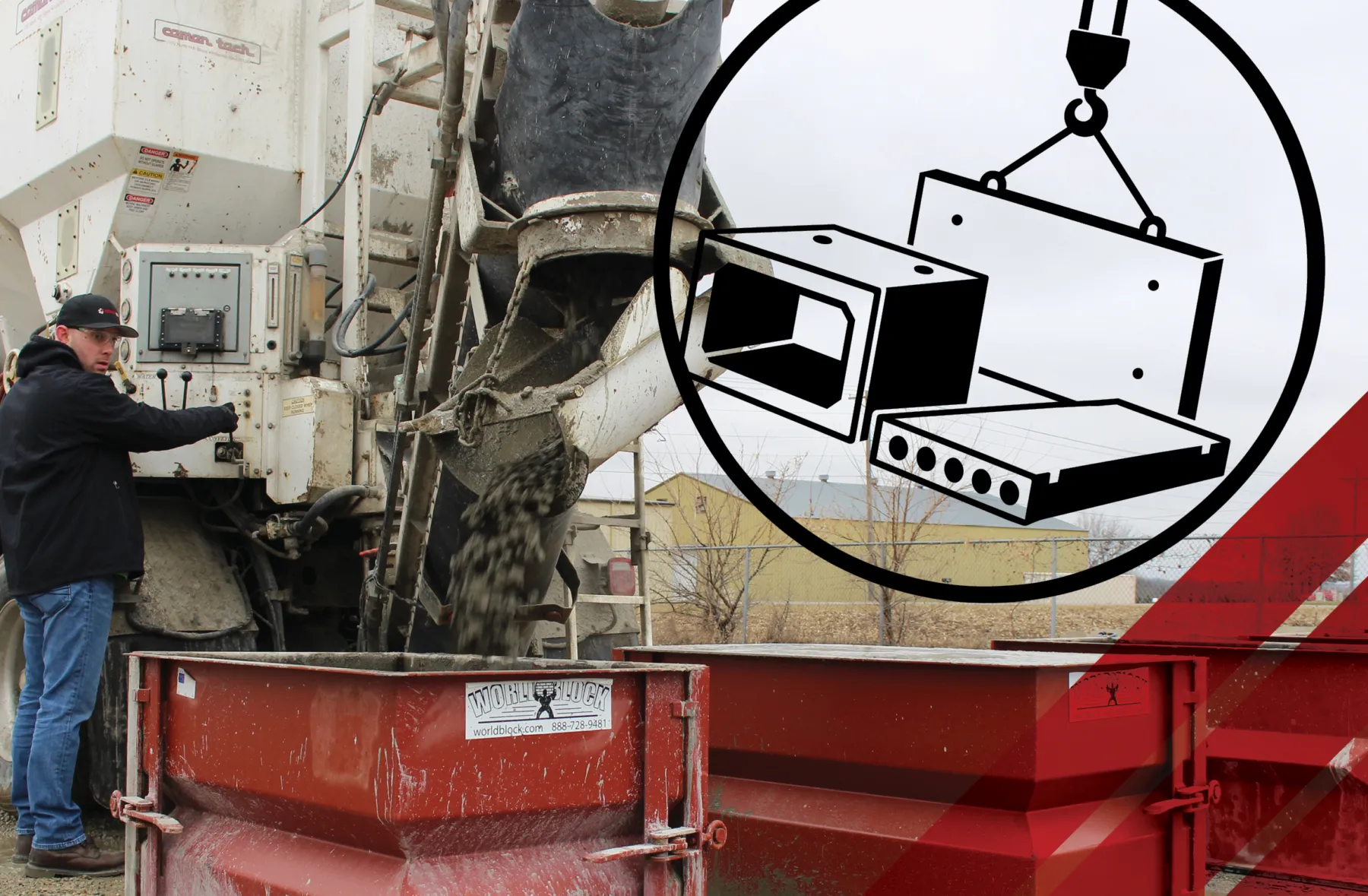
Volumetric mixers fit precast concrete production because they produce concrete in exactly the amount needed for each cast, allow real-time mix design adjustments between casts, and integrate cleanly with the casting schedule that precast plants run. Stationary volumetric mixers serve fixed-plant precast operations where the mixer stays in place and materials are delivered to it. Mobile volumetric mixers serve precast contractors who cast on-site or who need flexible production capacity beyond their fixed plant. Both approaches eliminate the returned-load waste that fixed-batch ready-mix delivery creates when cast schedules shift.
Why Volumetric Mixers Fit Precast Production
Precast concrete production has specific rhythms that traditional ready-mix delivery does not match well. Production happens in casting cycles, mix designs vary between products, and the production schedule shifts based on cast curing times, demolding schedules, and shipping requirements. Volumetric mixers fit these rhythms because they produce on demand to exact specification.
Cast-to-cast mix variation
A precast plant might produce structural beams, architectural panels, and underground utility vaults in the same day, each requiring different concrete mix designs. A traditional batch-plant operation has to either run separate batches for each product (with the cleanup and changeover time that requires) or compromise on a single mix design that works adequately for everything. Volumetric mixers change mix designs on the fly with no batch-plant changeover.
Production matched to casting capacity
Precast production rate is governed by the forms, the curing schedule, and the demolding cycle. The concrete supply has to match the rate at which casts are ready to be filled. Producing too much creates waste; producing too little stalls the casting crew. Volumetric mixers produce concrete continuously as casts come available, with production rate adjustable to match the casting rate.
Schedule shifts and casting delays
Precast schedules shift constantly. A cast may be delayed by inspection, formwork issues, reinforcement problems, or material delivery timing. With ready-mix delivery, schedule shifts create returned-load disposal problems and wasted truck time. With volumetric mixing, schedule shifts are absorbed naturally because concrete is not produced until the cast is ready.
Quality control documentation
Precast plants often supply structural products that require detailed quality documentation: batch records, strength test results, dimensional verification. Volumetric mixers generate batching records and digital tickets for every pour, which integrate with the plant’s quality control system. ACI 318 and PCI design standards both depend on documented mix and placement, which volumetric mixers support natively.
Stationary Mixers for Fixed-Plant Precast Operations
Established precast producers running fixed plant operations typically use stationary volumetric mixers as part of the plant infrastructure. The mixer stays in one location and materials are delivered to it from on-site silos and aggregate bins.
How stationary volumetric differs from traditional batch plants
A traditional batch plant produces concrete in discrete batches sized to the equipment capacity. The plant has to be cleaned out between mix designs, which limits the practical mix variation in a production day. A stationary volumetric mixer produces continuously, with materials metered into the mix in real time. The result is greater mix flexibility, less changeover downtime, and production rates matched to casting needs rather than batch sizes.
Sizing stationary equipment for plant capacity
Stationary volumetric mixers are sized to the plant’s typical production rate. Smaller precast operations producing limited daily volume may need a compact stationary unit. Larger plants producing high daily volume need larger capacity. The right size depends on the typical cast volume, the casting cycle time, and the diversity of mix designs in production.
Integration with plant infrastructure
Stationary mixers integrate with the plant’s materials handling: cement and aggregate silos, water systems, admixture dosing, and the digital quality control infrastructure. A well-designed precast plant treats the mixer as a core piece of plant equipment, not an add-on. The materials handling capacity has to match the mixer’s production capacity for the integration to work efficiently.
Cemen Tech’s SCD stationary mixer lineup Concrete
Cemen Tech’s SCD-series stationary mixers cover precast plant operations from small compact installations to large high-volume plants. The lineup includes the SCD2-50 and SCD5-50 for smaller operations, the SCD6-100 and SCD8-150 for mid-range plants, and the SCD10-200 for the largest production capacity. Sizing depends on the daily production volume and the typical mix variation a plant runs.
Mobile Volumetric Mixers for Precast Operations
Not every precast operation runs from a fixed plant. Some precast work happens on-site (cast-in-place adjacent operations, site-built precast for specific projects), and some precast contractors use mobile equipment to supplement fixed-plant capacity during peak production.
On-site precast for project-specific work
Some construction projects involve precast elements cast on-site rather than transported from a fixed plant. Large structural elements that exceed transport limits, project-specific architectural pieces, or remote work locations may all favor on-site casting. Mobile volumetric mixers handle this work because the mixer comes to the job site rather than the cast traveling to a plant.
Supplementing fixed-plant capacity
During peak production, a fixed-plant precast operation may need supplemental concrete supply beyond what the plant’s stationary mixer can produce. A mobile volumetric mixer brought in for peak periods adds capacity without permanent plant investment. This is also useful when the fixed mixer is down for maintenance and the casting schedule cannot accommodate a full shutdown.
Specialty applications and small-batch production
Some precast products are produced in such small quantities that running the full fixed plant is uneconomical. Small specialty casts, mock-up production, or research and development work may all favor a mobile mixer that can be dedicated to the small-batch work without taking the main plant offline.
Mix Design Considerations for Precast
Precast concrete typically uses higher-performance mix designs than general construction concrete. The structural performance requirements, the demolding schedule, and the aesthetic and dimensional requirements all drive mix design choices.
High early strength for demolding
Precast production cycles depend on the cast reaching demolding strength quickly so the form can be cleaned and reused for the next cast. Mix designs often emphasize early strength gain through Type III cement, higher cement content, accelerators, or steam curing. The mixer has to handle the high-cement-content mixes without segregation or workability issues.
Self-consolidating concrete (SCC) for complex shapes
Precast products with complex shapes, dense reinforcement, or surface detailing often use self-consolidating concrete that flows into the form under its own weight. SCC mix designs are specifically engineered for flowability without segregation. ACI 237 covers SCC specifications. Volumetric mixers can produce SCC when the admixture systems are configured for the specific requirements.
Durability and exposure considerations
Precast products are often used in aggressive exposure environments: bridges, marine structures, parking decks, utility vaults in chloride-rich soils. Mix designs incorporate supplementary cementitious materials (fly ash, slag cement, silica fume) and air entrainment to address durability per ACI 318 exposure class requirements. The plant has to be able to produce the required mix consistently for every cast that will see the exposure environment.
Aesthetic and architectural finishes
Architectural precast products have surface appearance requirements that drive mix design choices: specific aggregates for exposed-aggregate finishes, pigments for integral color, specific cement types for surface uniformity. The mixer has to handle these specialty materials accurately. Variability in the mix shows up as variability in the finished surface, which is unacceptable for architectural work.
Equipment Considerations for Precast Work
Precast production places specific demands on volumetric equipment, whether stationary or mobile. The right equipment selection depends on the production scale, the mix variation, and the operational integration with the rest of the plant.
Production rate matched to casting capacity. The mixer’s production rate should match the plant’s casting capacity at peak production, with margin for occasional surges. Undersized mixers stall the casting crew; oversized mixers represent wasted capital.
Mix flexibility for diverse product lines. Plants producing diverse precast products (structural and architectural, multiple cement types, varied aggregate sizes) need equipment that can handle the variation. Confirm the mixer’s metering systems accommodate the full range of materials in the plant’s production.
Materials handling integration. The mixer integrates with cement silos, aggregate bins, water systems, and admixture dosing. The integration should be designed at the plant level, not retrofitted as an afterthought. Strong materials handling makes the mixer’s on-demand production a real advantage; weak materials handling undermines it.
Documentation and quality control integration. For structural precast supplied to commercial and infrastructure projects, the documentation requirements are significant. The mixer’s batching records and digital tickets should integrate with the plant’s overall quality control system, not exist as a separate paper trail.
Service support and downtime tolerance. A precast plant operating at full production has limited tolerance for mixer downtime. Equipment from manufacturers with strong service support, quick parts availability, and proven uptime track records is the safer choice for production-critical operations.

Can volumetric mixers be used for precast production?
Yes. Volumetric mixers fit precast production because they produce concrete on demand in the
exact amount needed for each cast, allow mix design adjustments between casts, and match
production to the casting schedule. Stationary volumetric mixers serve fixed-plant operations; mobile
mixers serve on-site casting and supplemental production. Both approaches eliminate returned-load
waste.
What is the difference between a stationary mixer and a mobile volumetric mixer for precast?
Stationary mixers stay in one location and are integrated into the plant’s materials handling
infrastructure. Mobile mixers travel to job sites or move between locations. For fixed-plant precast,
stationary equipment matches the production model. For on-site casting, project-specific work, or
supplemental capacity, mobile equipment provides flexibility.
What size stationary mixer does a precast plant need?
Sizing depends on daily production volume, casting cycle time, and the diversity of mix designs in
production. Compact stationary mixers fit smaller operations with limited daily volume. Larger units
serve high-volume plants. The right size also depends on the materials handling capacity feeding the
mixer; an oversized mixer constrained by inadequate materials supply is not a productivity gain.
Can volumetric mixers produce self-consolidating concrete (SCC)?
Yes, when the mixer’s admixture metering systems are configured for SCC mix designs. ACI 237
covers SCC specifications. Volumetric production of SCC requires careful admixture dosing because
SCC mix designs are sensitive to dosage variation. For precast plants producing significant SCC
volume, this is worth confirming with the equipment specifications.
What documentation do precast plants need from a volumetric mixer?
Modern volumetric mixers generate batching records and digital tickets for every pour, including
the mix design, materials used, batch quantity, and time stamp. For structural precast subject to ACI
318 and PCI design standards, this documentation supports the quality records required by the
standards. The mixer’s documentation should integrate with the plant’s overall quality control system.
Next Steps
- Explore stationary mixer options: Cemen Tech’s SCD-series stationary mixers cover precast
operations from compact installations to large high-volume plants. -
Explore mobile mixer options: For on-site precast or supplemental capacity, see the full equipment
lineup including truck-mounted and trailer-mounted volumetric mixers. - Talk to a representative: For specific precast plant equipment selection or operational questions,
contact a Cemen Tech rep for a no-pressure conversation.