
 English
 Español
 Français
 Deutsch
 Polski
 Nederlands
Foundations, Footings, and Slabs: When Volumetric Mixers Win
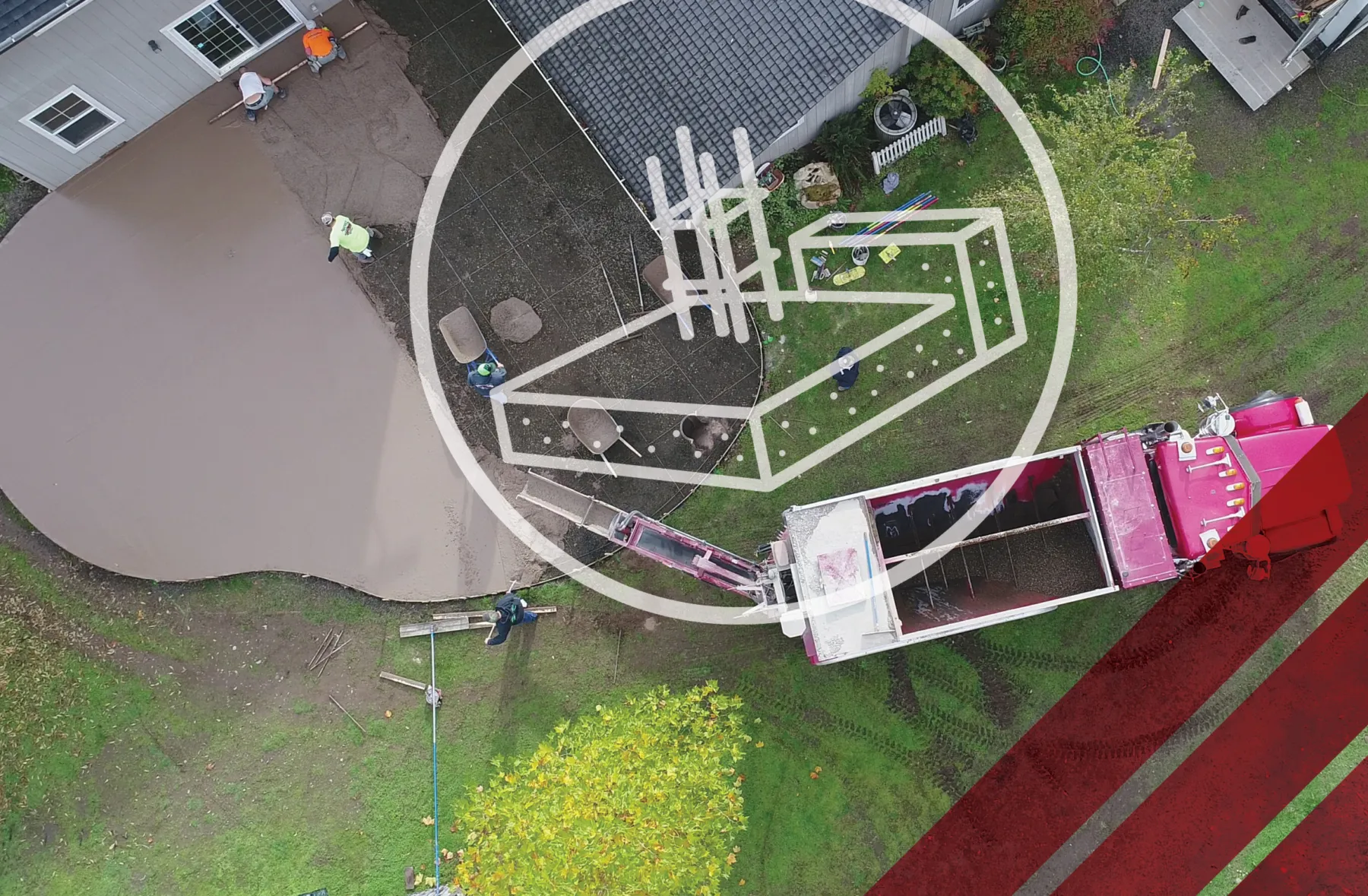
Volumetric concrete mixers are well suited to residential and small commercial foundation, footing, and slab work because pours are often small, scattered across the job site, and demand precise mix specifications. Foundation walls, spread footings, slab-on-grade pours, garage and basement slabs, driveways, sidewalks, and patios all benefit from on-site mixing that produces fresh concrete in the exact amount needed. Volumetric mixers eliminate the returned-load waste that ready-mix delivery creates on small pours, accommodate mix design changes between pours, and let contractors serve job sites that ready-mix trucks struggle to reach economically.
Why Foundation and Slab Work Fits Volumetric
Foundation and slab work has logistics that match volumetric mixing well. The pours are often small relative to what ready-mix trucks deliver, scattered across job sites, sensitive to mix specification, and tied to inspection and scheduling dependencies that disrupt fixed-route delivery.
Pour sizes match production capacity
A typical residential foundation pour might be 5 to 15 cubic yards. A spread footing might be 2 to 4 yards. A residential driveway might be 6 to 10 yards. These are pour sizes where ready-mix trucks routinely arrive with excess capacity. Volumetric mixers produce the exact amount needed for each pour, with no returned-load waste and no disposal cost.
Mix design varies by application
A foundation wall pour uses different concrete than a slab-on-grade. A garage slab in a freeze-thaw climate uses different concrete than a basement slab in a dry climate. A driveway exposed to de-icing salts needs durability features that a sidewalk does not. Volumetric mixers allow each pour to use its appropriate mix design without the logistical headache of scheduling separate ready-mix deliveries.
Inspection and schedule dependencies
Foundation pours often depend on inspections (footing inspection, reinforcement inspection, formwork inspection) that may not happen on schedule. Ready-mix delivery has to be coordinated against the inspection timing, and a delayed inspection can mean returned-load concrete and a wasted trip. Volumetric mixers eliminate this risk because the concrete is not produced until the inspection clears and the pour is ready.
Access constraints on residential sites
Residential job sites often have narrow access, soft ground, overhead utility lines, and tight setbacks that make ready-mix truck access difficult or impossible. Trailer-mounted or compact truck-mounted volumetric mixers handle these constraints better than full-size ready-mix trucks. For contractors working in established neighborhoods or on infill sites, the access flexibility is itself a competitive advantage.
Common Foundation, Footing, and Slab Applications
The general category of “foundations, footings, and slabs” covers several distinct work types, each with specific concrete and placement requirements. Understanding the differences helps with both project planning and equipment selection.
Spread footings and foundation walls
Spread footings distribute building loads to the soil below the structure. They are typically poured first, allowed to cure, and then become the base for foundation walls or columns above. Foundation walls form the perimeter of basements, crawl spaces, or stem walls under slab-on-grade structures. Both applications use structural concrete designed for compressive strength (typically 3,000 to 4,000 psi) with appropriate exposure class for the local soil and water conditions.
Slab-on-grade (residential and light commercial)
Slab-on-grade is the standard floor system for many residential and light commercial buildings. The slab is poured directly on prepared subgrade, typically with vapor barrier, base course, and rebar or fiber reinforcement. Mix designs balance compressive strength with finish ability and durability. Air entrainment is standard in freeze-thaw climates.
Garage and basement slabs
Garage slabs face different exposures than basement slabs. Garage floors deal with chloride exposure from de-icing salts on vehicles, freeze-thaw cycling in unheated garages, and point loading from vehicle tires. Basement slabs deal with moisture intrusion from below, often with vapor mitigation requirements. Mix designs differ accordingly: garage concrete often uses lower water-cement ratios and air entrainment; basement concrete often emphasizes lower permeability.
Driveways, sidewalks, and exterior flatwork
Exterior flatwork (driveways, sidewalks, walkways, patios) faces all the durability challenges of outdoor concrete: freeze-thaw, de-icing chemicals, UV exposure, and surface wear. Air entrainment per ACI 318 exposure class requirements is essential in cold climates. Surface finishing (broomed, stamped, exposed aggregate) affects how the concrete is placed and worked.
Specialty foundations (brief)
Deep foundations (drilled piers, helical piles with concrete caps), mat foundations for buildings on poor soil, post-tensioned slabs for larger commercial work, and other specialty applications exist. These typically involve larger pours, structural engineering decisions, and sometimes contractor specialization that goes beyond general residential and light commercial work. They are mentioned here for completeness; the rest of this piece focuses on the common applications most volumetric owner-operators serve.
Mix Design Considerations
Foundation and slab work uses several different mix designs depending on the structural role,
exposure environment, and finishing requirements. The mix design choices affect both the concrete performance and how the volumetric mixer is operated.
Compressive strength specifications
Residential foundations typically require 3,000 psi at 28 days, though some jurisdictions or specific designs require 3,500 to 4,000 psi. Light commercial may require 4,000 to 5,000 psi. The compressive strength specification drives the cement content, water-cement ratio, and sometimes the inclusion of supplementary cementitious materials. ACI 318 provides the durability and strength framework, and local building codes layer specific requirements on top.
Exposure class and air entrainment
Concrete exposed to freeze-thaw cycling, de-icing chemicals, or wet conditions needs air entrainment to provide freeze-thaw resistance. ACI 318 exposure classes (F0 through F3 for freezing, S0 through S3 for sulfate, W0 through W2 for water exposure, C0 through C2 for chloride exposure) define the air content and water-cement ratio requirements. Volumetric mixers can produce air-entrained concrete by metering the air-entraining admixture during mixing.
Workability and slump control
Foundation pours typically use higher slump concrete (4 to 6 inches) for placement around rebar and into formwork. Slab work typically uses lower slump (3 to 4 inches) for better finishing characteristics. Water-reducing admixtures help achieve workability without exceeding the water cement ratio limit set by the exposure class. The mixer’s admixture metering capability matters for hitting both targets simultaneously.
Fiber reinforcement (when specified)
Some slab work uses fiber reinforcement (synthetic or steel fibers) to control shrinkage cracking and add tensile strength. Fiber-reinforced concrete can be produced on volumetric mixers when the unit is configured to add fibers during mixing. Fiber dosage and timing matter for proper distribution in the concrete.
Project Planning for Foundation and Slab Work
Foundation and slab pours often look simple from the outside but involve coordination across
inspections, formwork, reinforcement placement, and finishing. Building these into the project plan avoids the late-stage scrambles that cost time and money.
Inspection sequence and timing
Most jurisdictions require inspections before the pour can proceed: footing excavation and rebar placement, foundation reinforcement, slab vapor barrier and reinforcement, and other intermediate inspections depending on the local code. The pour cannot proceed until the inspection clears. Volumetric mixing aligns with this because the concrete is produced after the inspection signoff, not before.
Weather and temperature considerations
Foundation pours happen year-round in many climates. Cold-weather concreting per ACI 306 requires temperature control, heated water, and curing protection below certain temperature thresholds. Hot-weather concreting per ACI 305 requires evaporation control and possibly chilled water or ice. Volumetric mixers allow real-time adjustment for temperature conditions in ways that fixed batch-plant deliveries cannot.
Crew coordination and finishing
Slab work especially depends on tight coordination between concrete production and the finishing crew. The mix has to arrive at the right rate for the finishers to keep up, and the workability has to hold long enough for proper screeding, floating, and final finishing. Volumetric mixing supports this because the production rate matches the placement rate, and the mix design can be adjusted in real time if conditions change.
Curing planning
Concrete curing affects final strength, durability, and surface quality. Curing methods include wet
burlap, plastic sheeting, curing compounds, and water curing. Curing duration depends on temperature and the specified strength gain. For foundations and slabs, proper curing in the first 7 days establishes the long-term performance. Skipping curing is the most common reason foundation and slab concrete underperforms its design strength.
Equipment Considerations for Residential and Light Commercial Work
Foundation and slab work has equipment requirements that differ from large infrastructure projects. Buyers and project planners selecting volumetric mixers for this work should weigh these factors.
Compact size for residential access. Tight job sites, narrow driveways, and overhead utility lines make compact mixers (often trailer-mounted) better suited than larger units. Match the equipment to the typical job site profile.
Mix flexibility across daily applications. A contractor running residential work may pour a footing, then a foundation wall, then a slab in the same day. The mixer needs to change between mix designs quickly without lengthy reset times.
Capacity matched to pour profile. For 5-to-15 yard typical pours, mid-sized mixers fit better than the largest commercial units. Excess capacity sitting idle costs money in fuel, financing, and depreciation every day.
Operator-friendly controls. Owner-operators and small crews benefit from mixers with straightforward controls and good operator training resources. Equipment that requires extensive specialized training adds friction to crew management.
Dealer service in the region. Residential contractors usually work within a defined geographic area. Equipment from manufacturers with strong dealer service in that region handles maintenance and repairs with less downtime than equipment from distant support networks.

Can volumetric concrete mixers be used for foundations?
Yes. Volumetric mixers are well suited to residential and small commercial foundations because
pours are typically small, mix designs vary between footings and walls, and job sites often have
access constraints that ready-mix delivery struggles with. Volumetric mixers eliminate returned-load
waste, accommodate inspection-driven schedule changes, and serve sites that ready-mix trucks
cannot easily reach.
What concrete strength is needed for residential foundations?
Most residential foundations require 3,000 psi at 28 days, though some designs or local codes
require 3,500 to 4,000 psi. Light commercial may require 4,000 to 5,000 psi. The specific requirement
comes from ACI 318 durability standards, the structural engineer’s design, and local building code.
Verify the specification before each pour.
Is volumetric concrete good for driveways and sidewalks?
Yes. Driveways, sidewalks, and other exterior flatwork are well-served by volumetric mixers
because the pours are usually small (often 5 to 10 yards), the mix often needs air entrainment for
freeze-thaw resistance, and contractors can match production to the work rate. The waste savings on
small flatwork pours often justify volumetric over ready-mix for these jobs.
Can I do garage and basement slabs with a volumetric mixer?
Yes. Garage slabs need different concrete than basement slabs (chloride and freeze-thaw
resistance vs lower permeability for moisture control), and volumetric mixers handle this well by
allowing each pour to use its appropriate mix design. The on-site mixing also matches the typical 8 to
15 yard pour size of residential garage and basement work.
What size mixer fits residential foundation work?
Compact and mid-range volumetric mixers fit residential foundation work best. Trailer-mounted
units excel on tight residential sites. Truck-mounted compact mixers work well for contractors with
steady residential and light commercial demand. The largest commercial mixers are usually overkill for
residential work and harder to position on typical job sites.
Next Steps
- See the equipment lineup: Cemen Tech’s volumetric mixer lineup includes compact and mid-range
units sized for residential and light commercial foundation work. - Read about paving operations: The McQuay Paving case study covers a contractor running
large-scale residential paving with volumetric mixers. - Read about fleet operations: The Bauman Landscape case study covers building a volumetric mixer
fleet for public works and parks projects. - Talk to a representative: For specific foundation and slab project questions, contact a Cemen Tech
rep for a no-pressure conversation.